
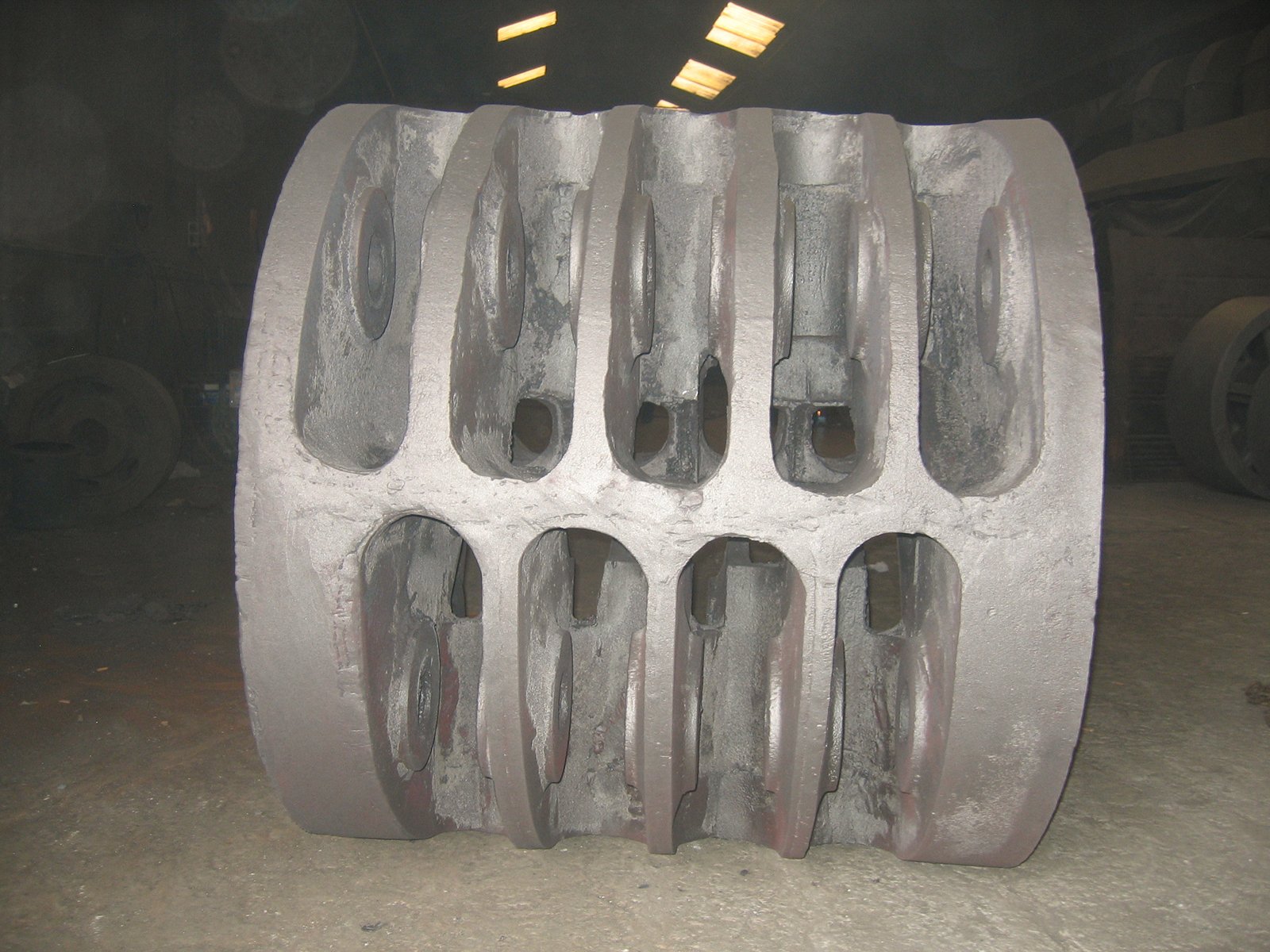
The choice of material in casting directly determines a part’s service life and performance. In this article we cover the main differences between the two most widely used casting materials: grey iron (lamellar graphite) and ductile iron (spheroidal graphite).
Grey Iron Casting
In grey iron, graphite is present in a lamellar (flake) form. This microstructure gives the material excellent machinability, high vibration damping and good thermal conductivity. Compressive strength is high, while tensile strength and ductility are limited. It is preferred for parts such as machine bodies, engine blocks, covers and housings where vibration damping is required.
Ductile Iron Casting
In ductile iron, graphite is brought into a spheroidal form by adding magnesium. The spherical structure reduces stress concentration, giving the material high tensile strength, ductility and impact resistance. With these properties, ductile iron offers near-steel mechanical performance while retaining the design flexibility of casting. It is widely used in valve bodies, gearboxes, connecting and load-bearing parts, wind turbine hubs and components under load.
Which One, When?
If a part mainly carries compressive load and requires good machinability and vibration damping, grey iron stands out; if high tensile strength, ductility or impact resistance is needed, ductile iron does. At Morçelik, we evaluate the part’s operating conditions together and determine the most suitable material and casting method, managing the entire process from technical drawing to quality control with engineering discipline.